Some artists are shaped by a single devotion. Others are formed in the space between disciplines, between logic and intuition, between structure and surrender.
Pragya Goel lives in that in-between.
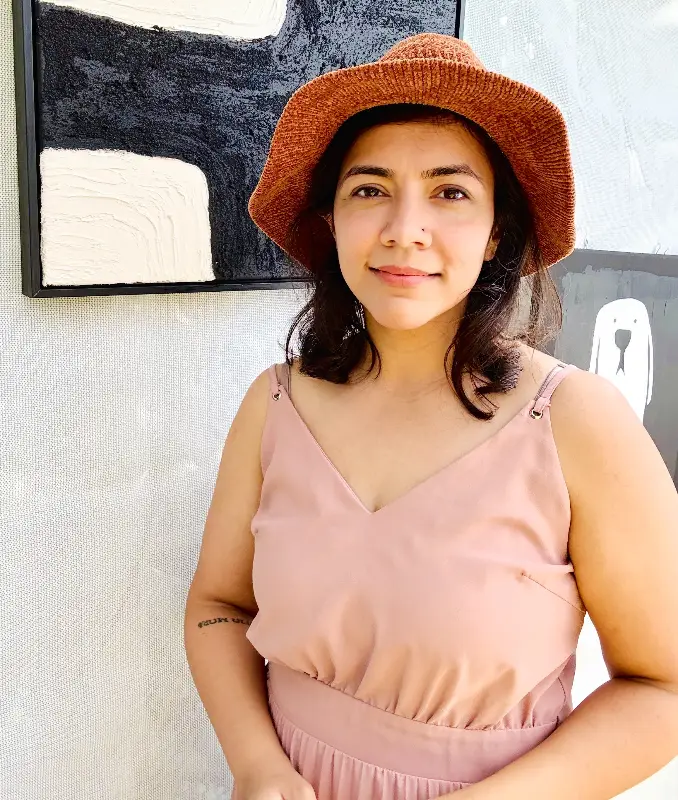
Based in the Bay Area, she moves daily through the precise architecture of software development. Her professional world is built on systems, clarity, and deliberate logic. Yet alongside that ordered landscape runs another current entirely. Painting offers her a territory without algorithms, a place where questions do not demand answers and uncertainty is not a flaw but an invitation.
“I’m still discovering what I’m searching for through painting,” she reflects.
It is not a destination she seeks. It is the act of searching itself that keeps her returning to the canvas.
In many ways, her artistic life feels like a quiet rebellion against predictability. Where code must function, art may simply exist. Where structure demands resolution, abstraction allows openness. The tension between these worlds does not divide her. It deepens her.
The Language of Texture
Pragya’s work centers on abstraction, texture, and form distilled to essentials. She is drawn to surfaces that feel tactile, almost alive beneath the eye.
Working primarily with acrylics and modeling paste, she builds embossed layers that rise gently from the canvas. These surfaces are not decorative. They are experiential. The viewer is invited closer, almost instinctively, as if the painting is asking to be felt rather than merely observed.
“I’m drawn to pieces that feel tactile and alive,” she says. “Where people want to get closer and almost touch the surface.”
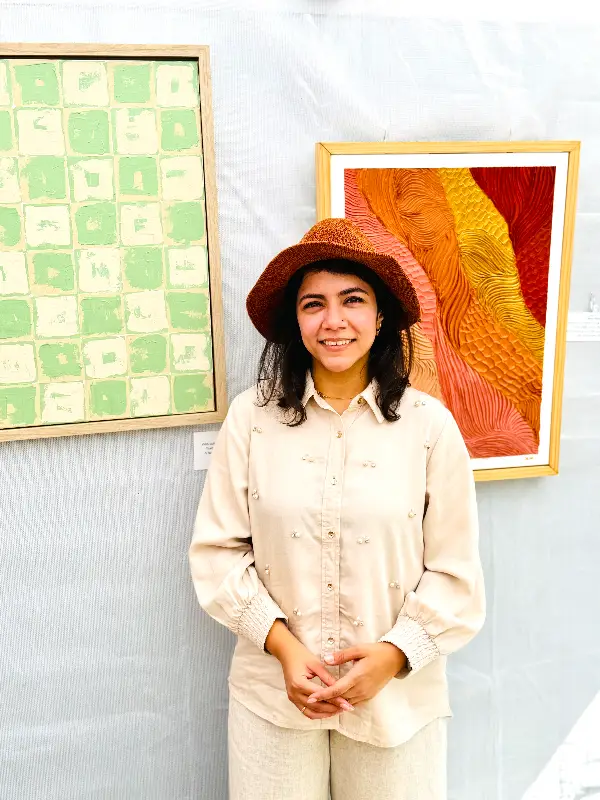
Her palette knives carve and shape with intention, yet spontaneity remains present. There is a delicate balance between control and release. The surface may appear minimal at first glance, but within its ridges and quiet forms lies a subtle complexity.
Texture becomes her vocabulary. Instead of telling stories outright, she allows feeling to emerge through physical depth. The absence of intricate imagery is deliberate. Simplicity creates room. And within that room, emotion settles.
Knowing When to Stop
One of the most elusive questions in any artist’s practice is knowing when a piece is finished. For Pragya, the answer is intuitive rather than formulaic.
“Honestly, I don’t always know when a piece is finished. I usually stop when I feel like I might start ruining it.”
There is a point where the composition feels balanced, where any additional stroke risks disturbing what has already found its harmony. Recognizing that moment requires restraint. It demands trust in what already exists.
Her process reveals a sensitivity to excess. She understands that depth does not always come from addition. Sometimes it comes from withholding.
That pause, that refusal to overwork, gives her paintings their quiet authority.
The Companion Called Doubt
Self doubt has not vanished from her journey. It remains present, as it does for many who create from a place of vulnerability.
“I don’t think I’ve ever completely overcome self doubt,” she admits.
Yet she continues.
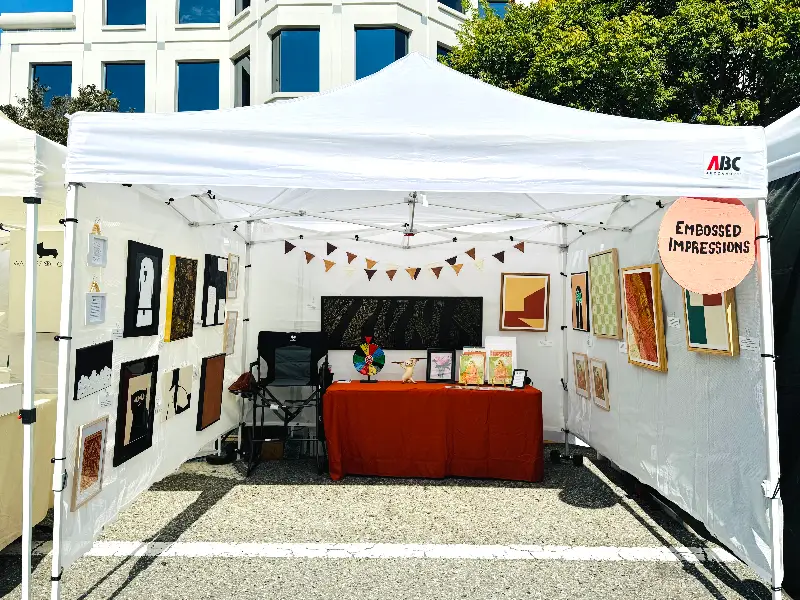
Rather than waiting for certainty, she works alongside uncertainty. She reminds herself to keep going, even when clarity feels distant.
Her first art fair became a quiet test of that resolve. Standing beside her work, sharing it beyond the privacy of her studio, required a different kind of courage. It was no longer just about creating, but about allowing herself to be seen.
Doubt, in her practice, is not an ending. It is a passage. And each step into visibility becomes proof that movement forward is possible, even in hesitation.
Consistency in Two Worlds
Balancing a full career in software with a committed art practice requires discipline of a different kind. Time must be carved out. Energy must be guarded. Creative space must be defended.
What she is most proud of is not a single exhibition or milestone. It is consistency.
She has stayed with it. Continued sharing. Continued building. Continued exploring.
There is something deeply moving to her about the thought that a piece she creates might one day hang in a stranger’s home somewhere across the world. The idea that her work could quietly integrate into someone else’s daily life fills her with awe.
Art leaves her studio and enters another person’s rhythm. It becomes part of morning light, of quiet evenings, of lived space.
That possibility fuels her.
Connection Above All
For Pragya, success is not measured in visibility alone. It is measured in connection.
“What matters most to me as an artist is connection.”
Through art, she has stepped outside the familiar boundaries of the tech world and into conversations with people who experience life differently. These interactions have expanded her sense of creativity, community, and identity.
Art has introduced her to voices she might never have encountered otherwise. It has opened dialogues that feel deeply human and unstructured. In these exchanges, she finds meaning.
The canvas becomes a meeting place. A silent mediator between strangers.
Emotion Without Instruction
Her approach to emotional connection is subtle. She does not narrate detailed stories within her paintings. Instead, she offers atmosphere.
“I want people to slow down, look closely, and find their own meaning in the work.”
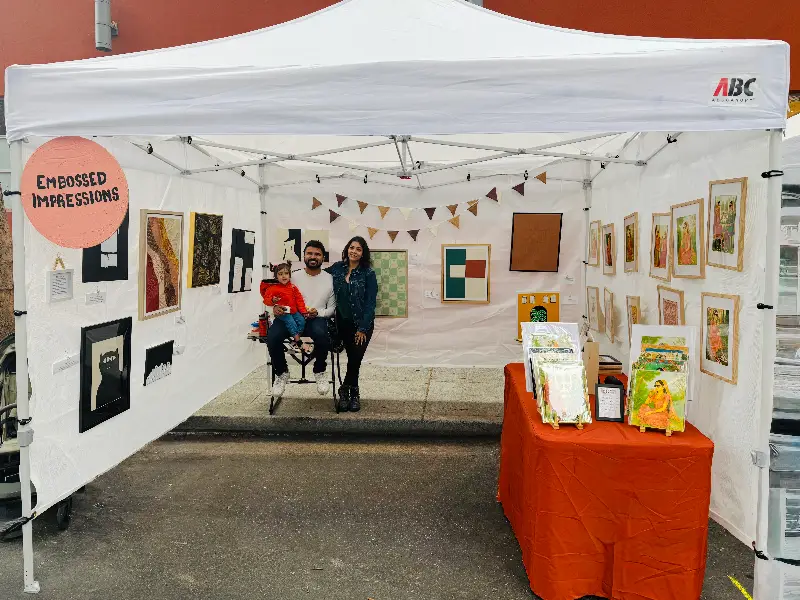
Abstraction allows viewers to project their own memories, moods, and interpretations onto the surface. The simplicity of form becomes an invitation rather than a directive.
Texture draws the eye inward. Space allows reflection. The painting does not insist. It waits.
In that waiting, something personal often emerges for the viewer.
Joy as the Quiet Engine
Beyond ambition and growth, beyond expansion and audience, there remains a simple truth.
Creating makes her happy.
It brings calm. It brings joy. It offers a sense of fulfillment that structured logic alone cannot provide. While she continues to deepen her artistic voice and push her textured abstractions further, the foundation of her practice remains grounded in this quiet satisfaction.
Happiness becomes her compass.
Between Code and Canvas
Pragya Goel does not choose between her worlds. She inhabits both.
In one, she builds systems that function with precision. In the other, she builds surfaces that breathe with ambiguity. One sharpens her analytical mind. The other softens her perception.
Together, they form a whole.
Her embossed impressions rise gently from the canvas, carrying traces of curiosity, restraint, vulnerability, and connection. They do not demand interpretation. They offer presence.
And somewhere, perhaps in a home she has never seen, one of her paintings may hang in quiet conversation with the everyday lives of others.
Between logic and longing, she continues her search.
And in that search, something enduring takes shape.