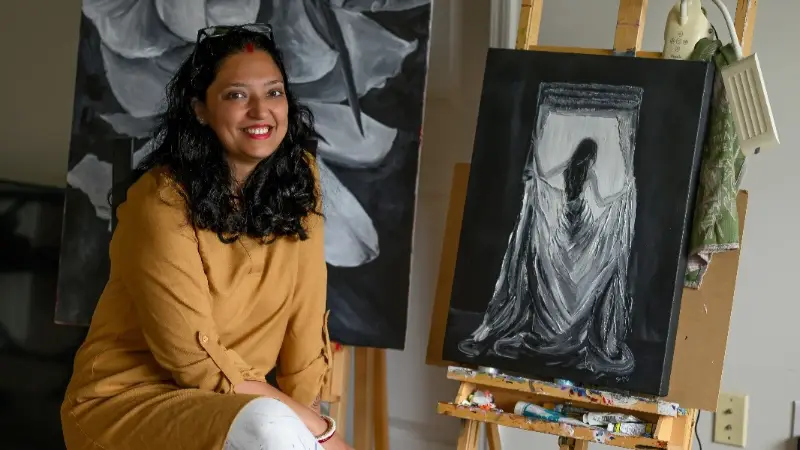
Some artists compose images. Others create spaces the viewer can quietly inhabit.
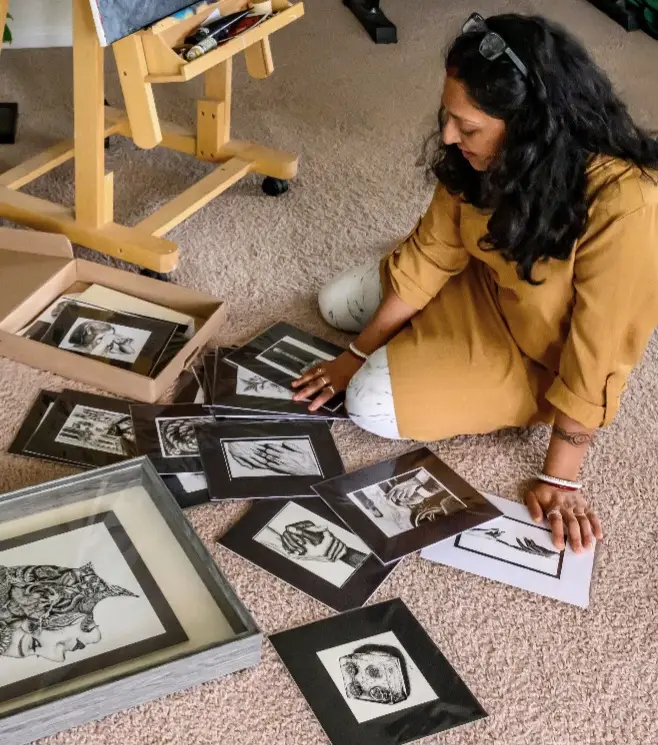
Sumi builds such spaces. Her monochromatic drawings unfold with patience, inviting a slower kind of looking where detail becomes revelation and silence carries weight. What appears delicate at first gradually reveals rigor, discipline, and emotional depth.
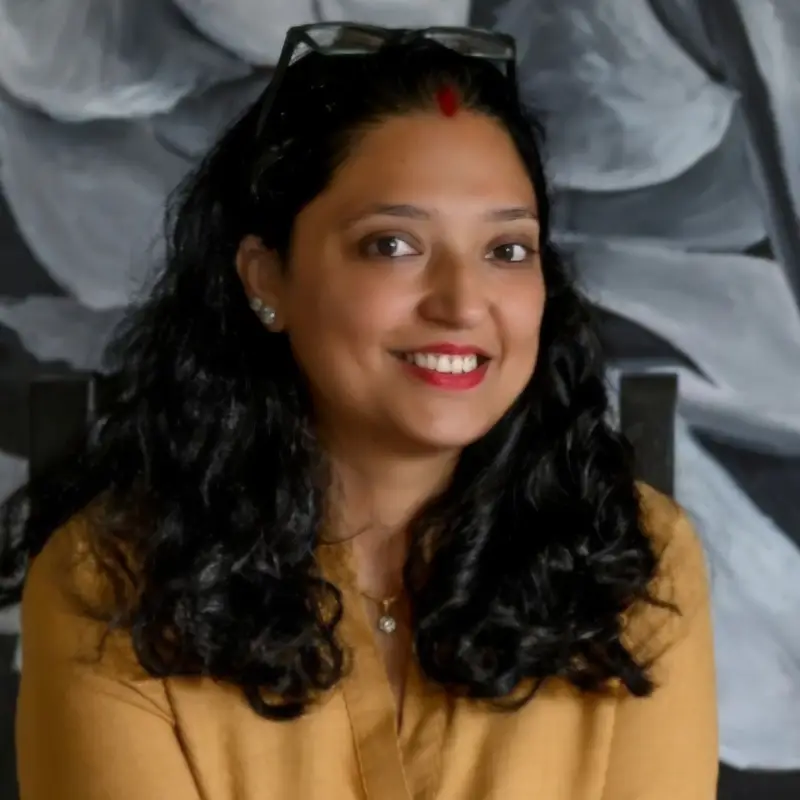
Her creative foundations were laid early. Growing up in an Indian household rich with artistic presence, expression felt natural, almost inevitable. Later, her background in architecture refined that instinct with structure and precision. The balance between emotion and order would become central to her visual language.
She began by sketching portraits for friends. Over time, the intimacy of those beginnings expanded into collections that would travel widely, eventually reaching collectors in India, Norway, Denmark, Canada, and the United States. Yet despite this widening geography, her work has never lost its personal pulse.
A pivotal influence came from living in Scandinavia, where long winters and restrained palettes reshaped her understanding of beauty.
“This experience inspired my recent collection, which thrives on the absence of color, allowing the finer details in my drawings to shine,” she says.
What might seem like subtraction became, for her, amplification.
The Discipline of Line
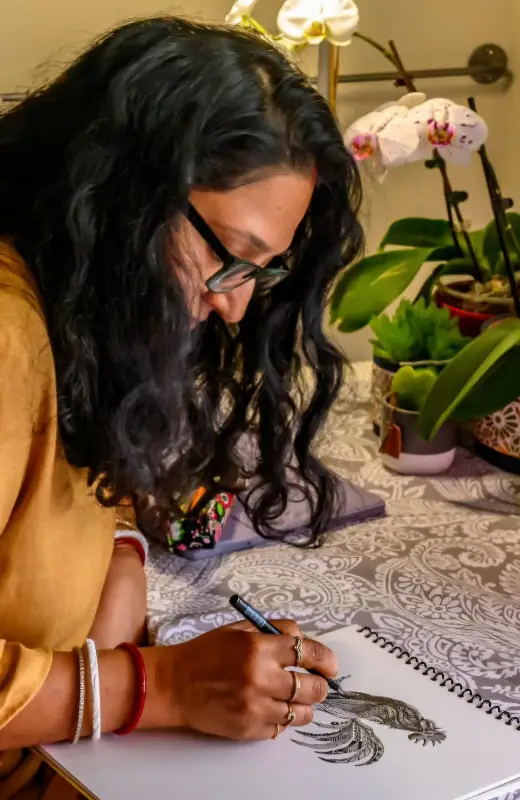
Though comfortable working in acrylics, oils, and ink, pen and ink remains the medium she returns to most faithfully.
“I create highly detailed, monochromatic drawings, mostly in black and white, where every line carries intention,” she explains.
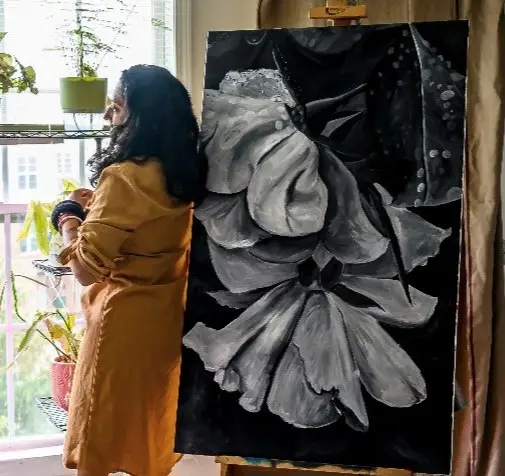
There is a moral clarity to this commitment. Without color, there is no ornament to lean on. Form must speak. Pattern must carry meaning.
“I feel that color can sometimes soften or obscure detail, while black and white sharpens it. It allows the essence of form, pattern, and the narrative to emerge with clarity.”
Her surfaces reward patience. The longer one looks, the more the work opens.
Nature as Belonging
If technique provides structure, nature provides spirit.
Across years of movement and travel, landscapes have remained her emotional anchor. Forests, reefs, and skies are not merely references but extensions of self.
“Nature doesn’t just surround me, it lives within me. I feel its rhythms in my heartbeat and its strength in my spirit,” she says.
This philosophy transforms observation into kinship. The Earth is not outside the frame. It breathes through it.
Such intimacy lends her drawings a rare vitality. They feel grown rather than constructed.
The Weight of Vulnerability
Even with international recognition, uncertainty remains a constant companion.
“Am I worth it? Is my art truly good enough? Should I price my work that high?” she asks, articulating doubts that echo for many artists yet are rarely spoken aloud.
In these moments, support from her husband becomes a stabilizing force.
“The faith he has in me, the way he stands beside me when I feel weak, is beyond explanation. His belief becomes my anchor.”
Behind every confident line lies an invisible act of courage.
Remembered, Not Merely Seen
For Sumit, success is measured not by ceremony but by memory.
“When a stranger sees me painting and recalls my work and mentions where they have seen it before, that moment feels greater than any formal achievement,” she says.
To live in someone’s recollection is to endure. It means the work has moved beyond objecthood into experience.
Her ambition is simple and profound: to create art that lingers.
The Storyteller
She describes her practice with a word that encapsulates both intimacy and generosity.
“I call my style of work Storyteller,” she says.
Every drawing begins from a personal source, a moment remembered, a bond cherished, a life honored. Yet she resists finality.
“I don’t want to tell my story directly. Instead, I want each viewer to find their own memory, their own emotion, their own moment within the lines.”
By loosening her grip on narrative, she allows the audience to step inside.
Art as Companion
When imagining her work in collectors’ homes, she turns to a metaphor of books.
There is always the volume placed carefully for display. And then there is the one you return to repeatedly, the one that meets you in private.
“I want my art to be that second book for every collector,” she says. “Something they feel deeply connected to, something they return to.”
Here, art becomes relationship.
Curiosity Without End
Despite fifteen years of practice, she continues to resist confinement. Public art, community collaborations, residencies, unfamiliar formats all beckon.
“How can I know whether something is right for me without giving myself permission to explore it?” she asks.
For her, growth is not a destination but a method.
Sumi to Emerging Artists
Having navigated the tension between introversion and expression, she now encourages others to move beyond silence.
“Many artists are introverted. Their language is art, not words,” she reflects.
Yet she has discovered transformation in communication.
“When I shared my process, my thoughts, and my stories, my art began to connect more deeply, and so did I.”
Within Sumi’s world, black and white is never absence. It is invitation. A place where viewers may arrive with their own histories and leave having discovered something new.
Her lines remain, long after the eye moves on.