Some artists paint the world they know. Others spend a lifetime chasing the world we were never meant to see.
Luis Carlos Rosales Barbier belongs to the second kind.
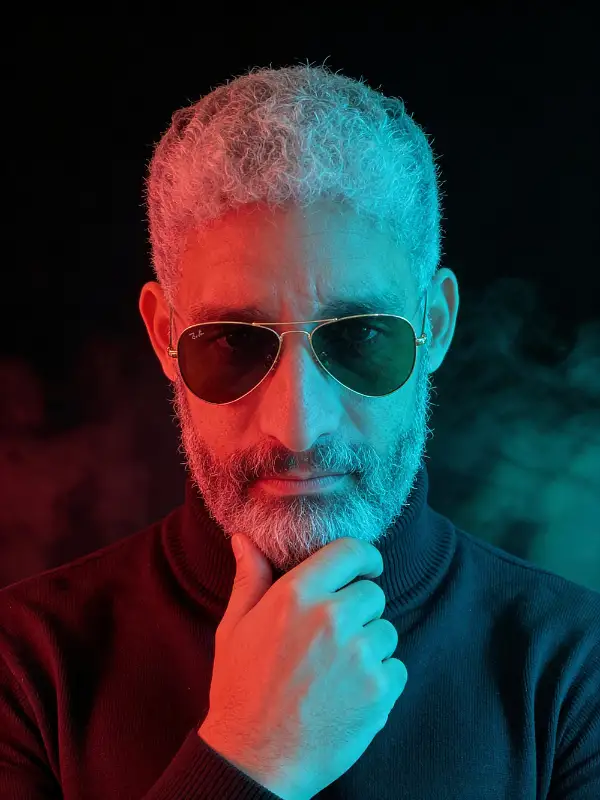
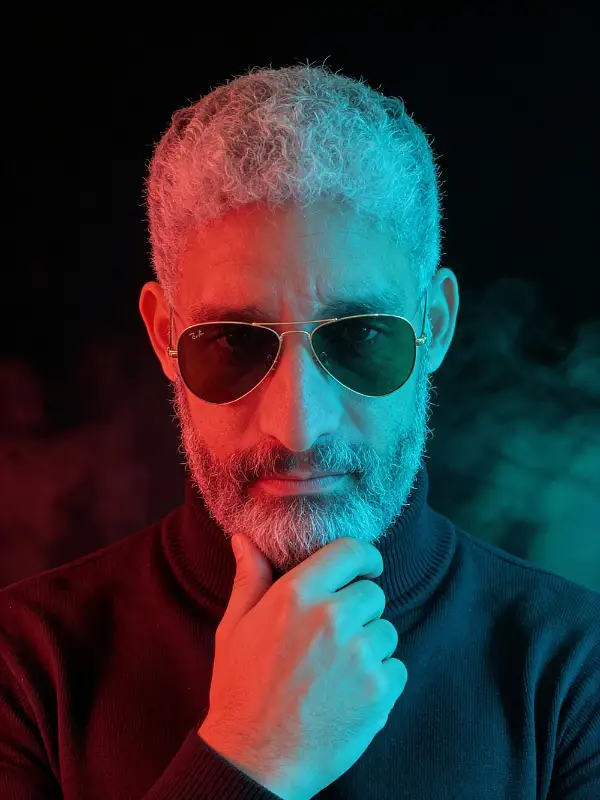
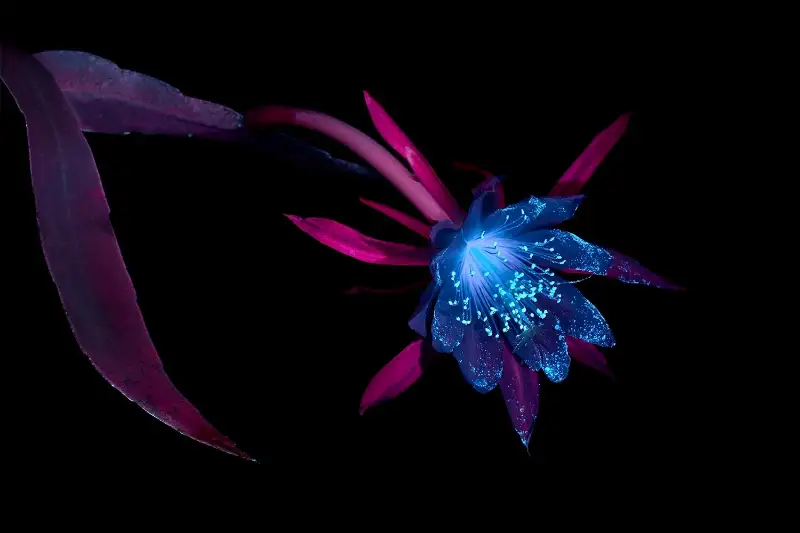
Based in El Salvador, he is a photographer and digital artist recognized internationally for a practice most people have never encountered: ultraviolet-induced visible fluorescence, or UVIVF. It is a way of photographing nature under ultraviolet light, coaxing flowers, minerals, and fossils to release colors and patterns that remain invisible to the human eye in ordinary daylight.
His work lives at the meeting point of art and science. Not one or the other. Both, at once.
"To me, art is discovery, science is emotion, and light is a tool for revealing truths that have always existed beyond our perception."
He is not inventing new worlds. He is documenting a real one that has always been here, waiting just outside the edge of what we can see.
A Language Learned in Advertising
Before the ultraviolet, there was the message.
Rosales Barbier studied Social Communication, earning a degree in Publicity and Marketing from the University of Palermo in Buenos Aires, where his thesis was named Best of the Year in 2010. His early career unfolded in advertising, visual communication, and brand management.
Those years were not a detour. They were a foundation.
The discipline of precision, the instinct for narrative, the careful construction of a visual language, all of it followed him from the world of brands into the world of natural specimens. His photographs are composed, not captured by accident. Every portrait carries the fingerprint of someone who learned, early, how to make an image speak.
His path into fine art began with digital art and photographic manipulation, leading to exhibitions across El Salvador, the United States, and Argentina, including Teatro Presidente, Galería La Pinacoteca, and the University of Palermo. In 2006, he took First Place at the International Festival of Digital Art of El Salvador.
But the work that would define him was still years away.
The Light That Reveals
UVIVF photography does not add anything to nature. It uncovers what is already present.
Under ultraviolet light, a familiar flower becomes unrecognizable. Fossils glow. Minerals surrender hidden geometries. The specimen has not changed, only the light we use to question it.
"Every photograph begins as a discovery. I never know exactly what nature will reveal until the specimen is illuminated under ultraviolet light."
This is what separates his work from imagined or manipulated imagery. He is documenting real optical phenomena and transforming them into museum-quality photographic portraits. Nothing invented. Everything found.
Over recent years, this pursuit has grown into one of the world's largest UVIVF photographic archives, a body of limited-edition fine art portraits of plants, minerals, fossils, and natural textures. His ultraviolet work has been exhibited in New York, at Florida art fairs, and in galleries across Austria and El Salvador, marking a new phase in his international presence.
Nature as the True Artist
Ask him where the beauty comes from, and he will point away from himself.
"Nature is the true artist. I simply create the conditions that allow its hidden beauty to become visible."
His inspiration renews itself with every specimen, because every specimen holds the possibility of surprise. No matter how ordinary a flower or fossil appears in daylight, ultraviolet light often reveals an entirely different identity beneath it.
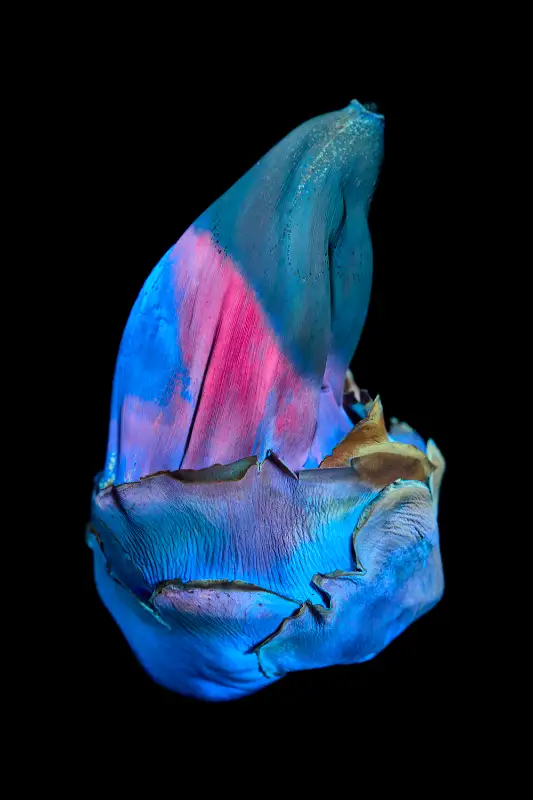
That moment of revelation never dulls. It is the reason he returns to the studio.
His role, as he sees it, is not to impose but to observe. To document. To share. The artist becomes a translator, and light becomes the language.
Discovery Cannot Be Rushed
There was no map for this.
When Rosales Barbier began, no established roadmap existed for the kind of work he wanted to make. He had to build his own ultraviolet lighting techniques, refine a controlled studio process, and learn, specimen by specimen, how different natural subjects behave under UV light.
Living subjects complicate everything.
Flowers often need several days of preparation before they are ready to be photographed. Some species bloom for only a single night each year. Each subject arrives with its own technical and biological demands, requiring patience, close attention, and constant experimentation.
He does not fight this. He has folded it into the work itself.
"Those challenges remind me that discovery cannot be rushed."
Beyond Recognition
Awards have come. Exhibitions, too. He is grateful for them.
But he is careful about what they mean.
"My greatest ambition isn't simply to receive recognition. It's to create a body of work that remains meaningful long after the exhibitions have ended."
For Rosales Barbier, recognition is a milestone, not a destination. Each one confirms that the work resonates, that others feel what he felt in the moment of discovery. And then it points him forward, back toward the archive he is still building.
The applause fades. The archive remains. He is building for the second one.
Meaning Over Decoration
Not every collector is his collector.
"My ideal collector values meaning over decoration."
The people drawn to his work are naturally curious. They appreciate originality. They are looking for something that reveals a deeper story, not simply something beautiful to hang on a wall. They want a photograph that changes how they see the world, and keeps changing it.
"I hope my photographs become lifelong companions that continue to inspire curiosity every time they are viewed."
The work does not exhaust itself in a single glance. It asks to be returned to.
The Hidden Spectrum
His life's work has a name.
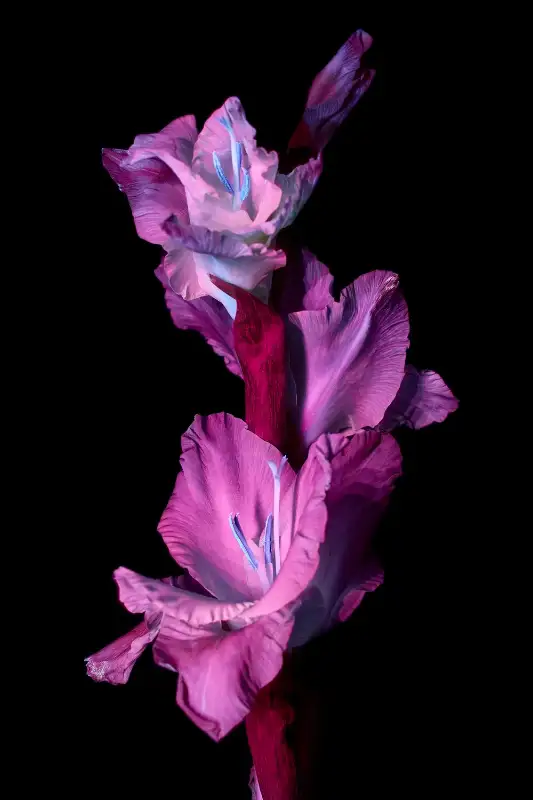
The Hidden Spectrum is a lifelong photographic archive dedicated to revealing dimensions of nature that exist beyond human vision. It is his mission stated plainly: to build one of the world's most comprehensive artistic archives of ultraviolet photography.
"A world we were never meant to see, but that has always existed around us."
This is the legacy he is working toward. A visual record of nature beyond our perception. One that invites curiosity, expands understanding, and reminds us that reality is far more layered and beautiful than what meets the eye.
If his work can shift, even slightly, how we see and relate to the natural world, that is enough.
Between the Seen and the Unseen
Luis Carlos Rosales Barbier does not choose between art and science. He inhabits the space where they become the same thing.
In one direction lies the rigor of technique, the controlled studio, the patient handling of light. In the other lies wonder, emotion, the quiet astonishment of watching a familiar thing reveal itself as something entirely new.
Together, they form his practice.
Every time he switches on the ultraviolet, he steps into the unknown. There is always the chance that a familiar flower, mineral, or fossil will show him something no one has seen before.
That possibility is what keeps him searching.
And somewhere in that search, between the light we can see and the light we cannot, an enduring archive of the hidden world continues to take shape.