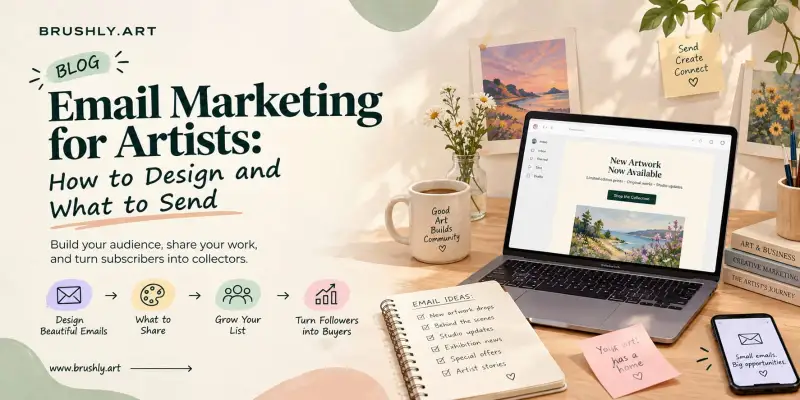
You post a new painting on Instagram, and it does well: a few hundred likes, some kind comments. A week later, one of your best collectors messages you: "Is that new piece still available? I only just saw it." Three people who have bought from you before never saw it at all.
An artist newsletter fixes that. It's a regular email to people who've asked to hear from you: past buyers, collectors, visitors who signed up at a fair, followers who joined from your website. Unlike a post, it lands in the inbox of everyone on the list. Keep it short, personal and visual, with one piece of news, one strong image and one link, and send it on a rhythm you can keep. Below: how to build the list honestly, what to send and how often, how to write emails people open, and a fast way to design each one.
Why email still sells art
Social media is rented space. The platform decides who sees your post, and the answer changes every few months. Your email list is yours, and everyone on it chose to be there, which makes it the most direct line you have to people who might buy.
Email also tells you who is interested. When you can see who opened an announcement and who clicked through to the piece, you know which collectors to follow up with personally, and a short personal note to someone who clicked twice is often how a sale actually happens.
Build the list the honest way
Start with the people who already know your work, and ask every one of them.
Past buyers and commission clients. Ask if they'd like first look at new work. Most will say yes.
Fairs, markets and open studios. Keep a sign-up sheet or a QR code on your stand.
Your website or portfolio. Put a sign-up box on your online portfolio and on every artwork page.
Your Instagram bio link. Offer something specific: "new work goes to the list first".
Thank-you notes and invoices. Invite buyers to join when you send the paperwork.
Only email people who have agreed to hear from you, include an unsubscribe link in every email, and remove anyone who unsubscribes straight away. Don't buy lists or add people you met once. A list of 50 people who care will sell more than 5,000 strangers who'll mark you as spam.
Once the list grows, split it. Past buyers, new sign-ups and people from a particular fair want slightly different emails, and tags let you send each group what suits it.
What to send
You don't need a new idea every month. Most artist newsletters rotate through a handful of email types.
| When | What's in it | |
|---|---|---|
| New work announcement | When a piece or series is finished | The image, the story, size, price, a link to buy |
| Studio update | Between releases | Work in progress, a process photo, what's coming |
| Available works | Every few months | A short selection of pieces still for sale |
| Collector preview | Before a public release | First look for the list, a day or a week early |
| Event invite | Before shows, fairs, open studios | Date, place, what they'll see, how to come |
| Year in review | December or January | Highlights, thank-yous, what's next |
How often to send
Once a month is a rhythm most artists can keep, and it's often enough that people remember who you are. Send a little more around a launch or a show, and a little less when there's genuinely nothing to say. Consistency beats volume: a monthly email that always arrives is better than a burst of four followed by six months of silence.
Write emails people open
Make the subject line specific. "New work: the Harbour series, available Friday" beats "Newsletter #12". Name the piece, the date or the event.
Use the preview text. The line shown after the subject in most inboxes is your second headline. Don't leave it to chance.
Start like a person. One or two sentences in your own voice about where the work came from. A newsletter is the one place a collector expects to hear from you directly.
One main image, one button. Show the piece large, then give a single clear action: view it, reserve it, or reply.
Put the facts in. Title, size, medium, price and whether it's still available. A collector who has to ask the price often doesn't.
Keep it short. If it needs scrolling on a phone for more than a few seconds, cut it.
Designing and sending with Brushly
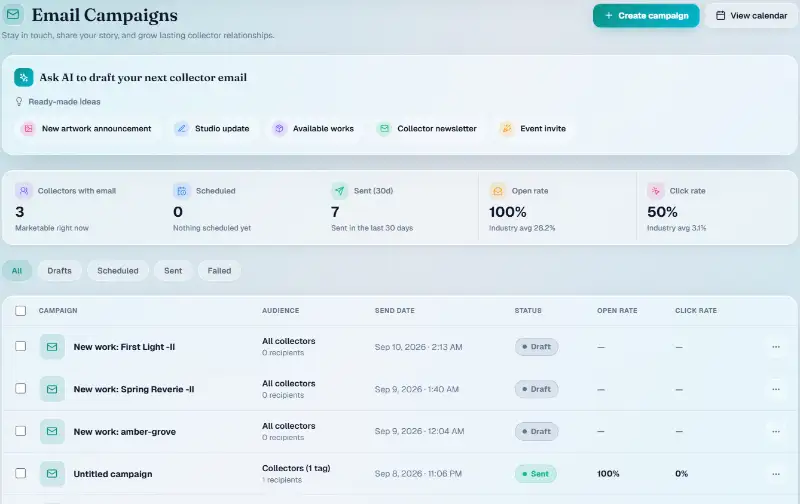
Brushly's email marketing is built around exactly these emails. On the Email Campaigns page, you can ask AI to draft your next collector email, or start from a ready-made idea: a new artwork announcement, studio update, available works, collector newsletter or event invite. The same page shows your drafts, scheduled and sent campaigns, and the open and click rate of each.
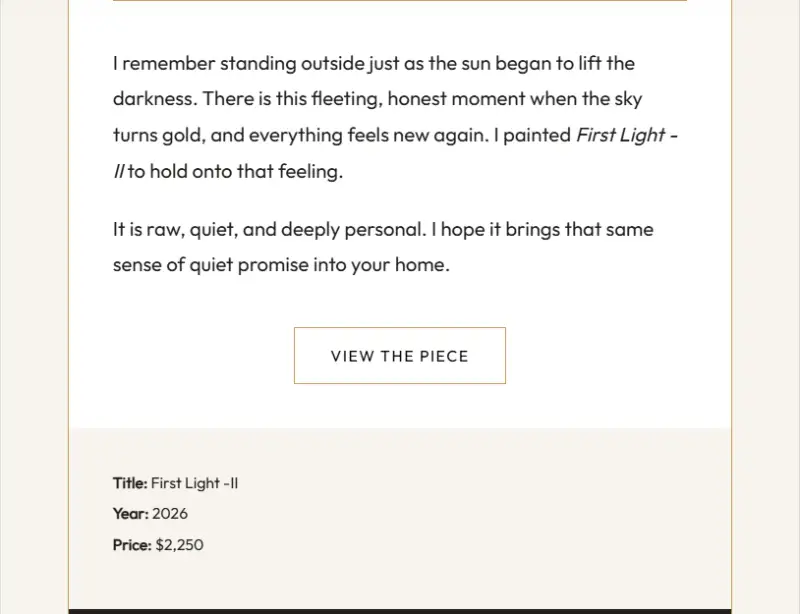
The email arrives already designed around your Brand Kit, meaning your logo and a colour palette you upload once (a screenshot of a palette works too). In the account we used, a new-work email had the subject "The moment the world wakes up", preview text naming the painting, a headline, a short first-person story, a "View the piece" button, and the title, year and price underneath. You can edit any text by clicking it, pick a different artwork, check the layout on desktop, tablet and mobile, or type what you'd like changed, such as "make the headline shorter" or "warmer tone".
From there, you choose who it goes to, all your collectors or a tag list, and send it or schedule it. Every email includes an unsubscribe link in the footer, and afterwards you can see who opened it and who clicked.
Here's the pricing, plainly. Designing emails is free on every Brushly plan. Sending them needs the email marketing add-on, which is separate from your plan and isn't included in any plan or in the free trial. It costs $14.99 a month, or $12.49 a month billed annually, and covers up to 500 email addresses with unlimited emails to them. On Indian plans it's ₹600 a month. You can add it to any plan and drop it whenever you like, so you can design your first few emails before deciding.
Measure what works, then follow up
After each send, look at two numbers: how many people opened it, and how many clicked. Over a few months, you'll see which subject lines work, which kinds of email your list likes, and which collectors keep clicking on the same kind of piece.
Then use it. Someone who clicked on a new painting twice deserves a short personal note, not another newsletter. If they're ready to buy, send the invoice from Brushly's sales tools and keep the conversation going. And post the same new work to your social media too, so followers who aren't on the list yet have a reason to join.
Quick answers
How often should an artist send a newsletter?
Once a month is a good default. Add an extra email around a launch, a show or a sale, and never send just to fill a schedule.
What should my first newsletter say?
Say who you are, what you're working on now, and what people on the list will get: first look at new work, invitations, the occasional studio story. Include one image and one link.
Can I email my Instagram followers?
Only the ones who sign up. Give them a reason to join, such as first look at new pieces, and put the sign-up link in your bio.
Do I need a big list to start?
No. Start with past buyers and people you've met at fairs. A small list of people who care about your work is the most valuable list you'll ever have.
Write your first collector email this week. Every new Brushly account comes with a 7-day free trial, so open Brushly, design an email around your newest piece with your own logo and colours, and add the email add-on when you're ready to send. See the plans for what each includes.

